
Honoring Our Past, Protecting Our Future
For thousands of years, our ancestors thrived by living in harmony with our homelands' abundant marine, freshwater, and upland resources. These resources supported every aspect of life—subsistence, spiritual, ceremonial, medicinal, and economic—and continue to shape our traditional lifeways today. With deep respect and connection to the natural world, our ancestors served as stewards of these lands and waters, ensuring their vitality for future generations.
The Treaty of Point Elliott (1855)
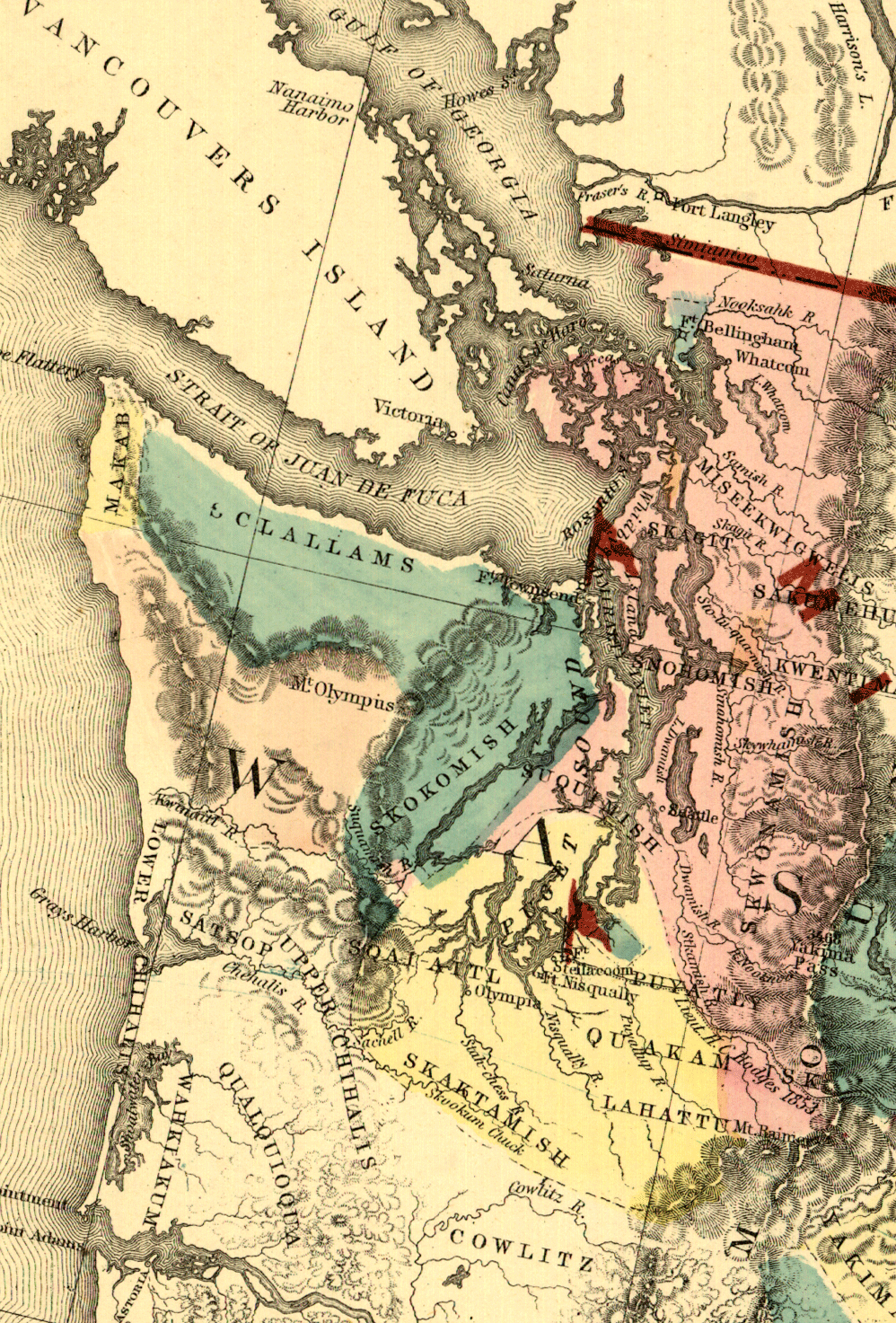
In 1855, leaders of the tribes now known as the Tulalip Tribes signed the Treaty of Point Elliott with the United States. Through this treaty, millions of acres of land were ceded in exchange for a small payment and the promise of federal protection. Crucially, the treaty also guaranteed the Tribes’ rights to fish, hunt, and gather in their usual and accustomed places.
These rights, known as reserved rights, were not granted by the treaty; they were retained. The U.S. Constitution recognizes treaties as the “supreme law of the land,” and the Treaty of Point Elliott remains as vital today as it was in 1855.
Article 5 Excerpt
"The right of taking fish at usual and accustomed grounds and stations is further secured… together with the privilege of hunting and gathering roots and berries on open and unclaimed lands."
Our Role: Treaty Rights Office
The Treaty Rights Office protects, implements, and upholds the treaty-reserved rights of the Tulalip Tribes. We collaborate with governments, organizations, and communities to ensure that these rights are recognized and that the natural resources they depend on are sustained for future generations.
Our Work Includes:
- Developing intergovernmental agreements and partnerships
- Shaping policy and strategy at local, regional, national, and international levels
- Anticipating and addressing threats to treaty resources
- Promoting conservation, sustainability, and tribal access to resources
Vision, Mission & Approach
Vision:
Tulalip Tribal members will continue to exercise their treaty-reserved rights to fish, hunt, and gather, preserving the vibrant culture of our ancestors for generations to come.
Mission:
To protect, enhance, restore, and ensure access to the natural resources essential for the long-term exercise of Tulalip treaty rights.
Our Approach:
- Address emerging threats & identify opportunities
- Strategic guidance for resource initiatives
- Lead policy, legislative, legal defense
- Build implementation partnerships
- Uphold co‑management authority
- Use best available science
- Educate the public
Program Areas
The ecosystems that have sustained our people since time immemorial, from the Pacific Ocean to the Cascade Mountains, have undergone dramatic changes since the signing of the Treaty. InduTreaty development, urbanization, and climate change have disrupted habitats and threatened the resources we rely on.
In response, the Treaty Rights Office focuses on the following key areas:
- Salmon Recovery (Habitat, Harvest, Hatcheries, Hydropower)
- Land-Based Treaty Rights & Access
- Climate Adaptation Planning
- Energy Policy & Development
- National & International Indigenous Rights
- Communications, Outreach, Education