




In 2024–2025 Planning, departments, community members, the Planning Commission, and the Board of Directors are collaborating to update the Comprehensive Plan. The Plan guides future growth, supports treaty rights and Tribal interests, and addresses emerging issues like climate change.
About the Update
The update will include 10 chapters covering development challenges, opportunities, resource stewardship, and infrastructure. Draft goals and policies will be posted for public review and comment.
Process & Timeline
Community input informs draft goals/policies. The Planning Commission reviews drafts and opens a public hearing. After incorporating comments, a recommendation is forwarded to the Board for adoption.
Community Involvement
Your input ensures an inclusive plan. Submit general comments today:
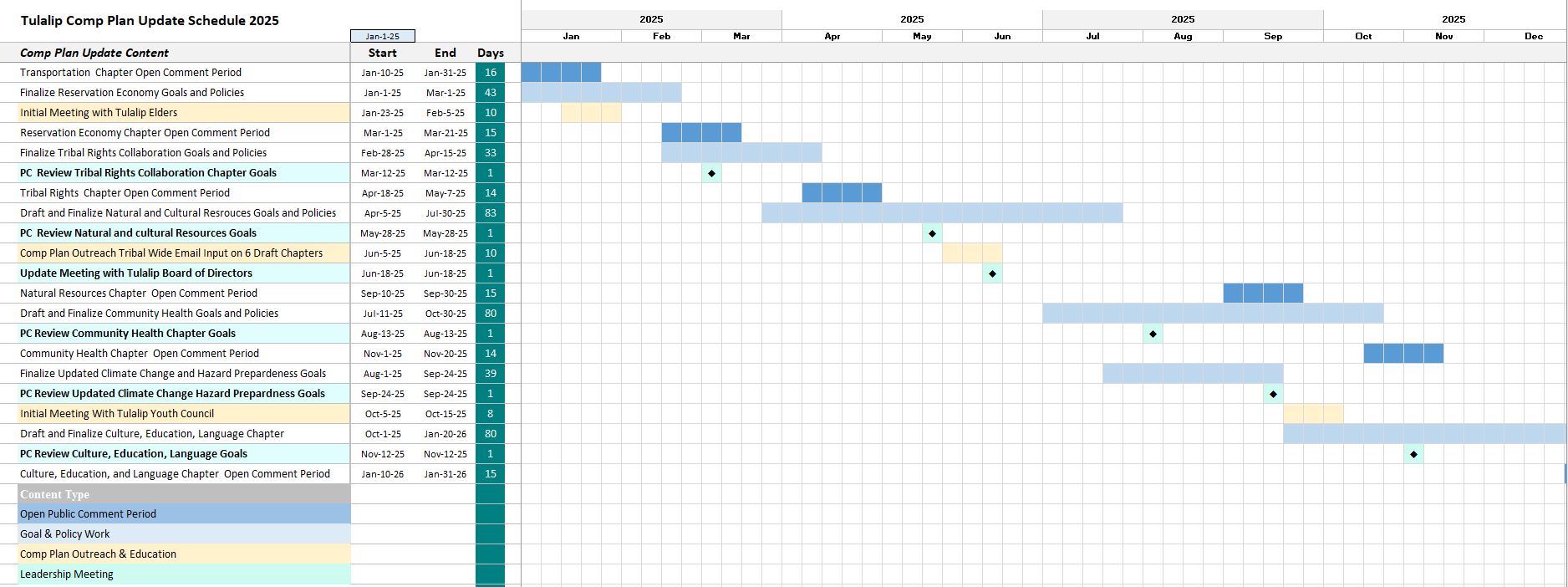
Update Schedule
Comprehensive Plan History
The Tulalip Tribes, successors to signatories of the 1855 Treaty of Point Elliott, maintain reserved lands while exercising treaty rights. Early federal policies reduced Tribal control and suppressed culture.
The Indian Reorganization Act (1930s) restored authority over natural resources and governance. In 1935 the first Board of Directors was elected and a Constitution adopted.
Strategic leasing around Tulalip Bay generated revenue for services and land acquisition. By 1972 expanded holdings necessitated a Comprehensive Plan to guide orderly growth.
The first Plan outlined programs for economic self‑sufficiency, employment, housing, infrastructure, environmental protection, and forestry and fishing support, informed by member input.
In 1986 a formal Planning program and Commission were established. Plan updates followed in 1994 and 2009; the current update continues that progression.